
On this page
Hearing that you need a breast biopsy can make your heart race. It helps to know that many biopsies show benign (non-cancerous) findings. A biopsy is simply the most reliable way to know exactly what a lump or imaging finding is, so you and your surgeon can decide on next steps with confidence.
Common benign breast conditions
- Breast cysts: fluid-filled sacs that often feel smooth and may be tender before your period. Simple cysts usually need no treatment, though painful ones can be drained.
- Fibroadenomas: solid, smooth, rubbery lumps made of gland and connective tissue. They are most common in women in their 20s and 30s. Some are monitored; others are removed if they grow or cause discomfort.
- Fibrocystic changes: lumpy, tender breast tissue linked to hormonal changes. This is very common and not a disease.
- Intraductal papillomas: small growths inside a milk duct that can cause nipple discharge.
- Atypical hyperplasia: abnormal-looking cells that are not cancer but can raise future risk. Your surgeon may recommend removal and closer screening.
Why would I need a biopsy?
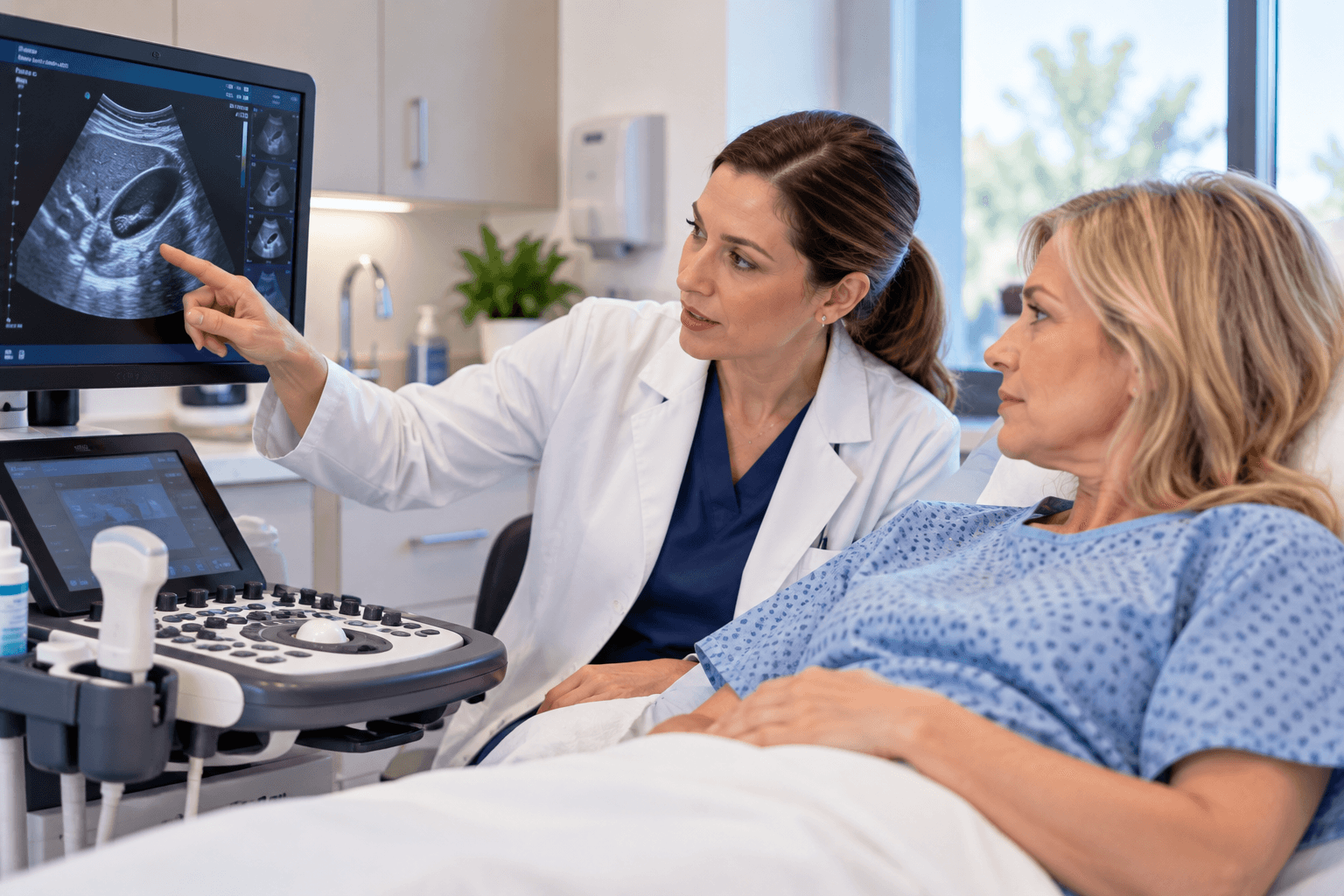
A biopsy may be recommended when a mammogram or ultrasound shows a solid mass, calcifications or an area that can't be clearly identified as benign. It removes a small sample of tissue so a pathologist can study it under a microscope.
Types of breast biopsy
- Core needle biopsy: a hollow needle, guided by ultrasound, mammogram or MRI, removes a few small tissue samples. It's done with local anesthesia and no stitches.
- Fine needle aspiration: a thin needle draws fluid or cells, often used for cysts.
- Surgical (excisional) biopsy: the surgeon removes all or part of the lump through a small incision. This may be used when needle results are unclear.
What happens after results come back?
If the result is benign, your surgeon may recommend routine follow-up imaging or removal of the lump for comfort. If atypical cells or cancer are found, your surgeon will explain your options clearly and help plan treatment. You won't navigate the next steps alone.
Frequently asked questions
Related services
Have an abnormal mammogram or a lump to check?
Call California Surgical Specialists at (909) 757-8425. Our surgeons evaluate benign and cancerous breast conditions in Upland and Glendora.
This article is for educational purposes and is not a substitute for medical advice. If you have symptoms, please see your healthcare provider.