

On this page
Occasional heartburn is common. But if you have reflux several times a week, take acid-reducing medication every day, or still have symptoms despite medication, you may have gastroesophageal reflux disease (GERD). For some people, surgery offers lasting relief by fixing the problem at its source.
What causes GERD?
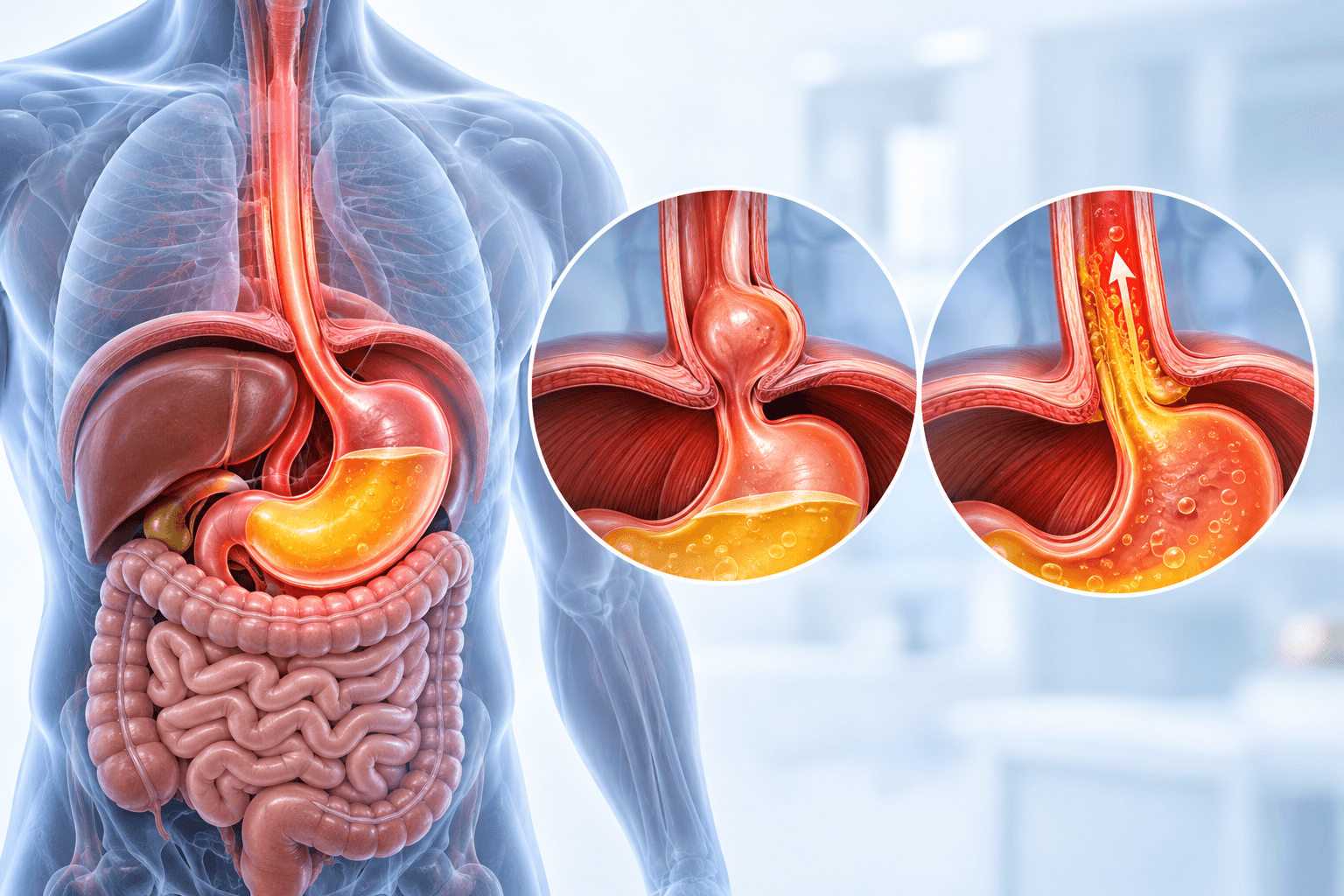
At the bottom of the esophagus is a ring of muscle called the lower esophageal sphincter (LES). It acts like a valve, letting food into the stomach and keeping acid out of the esophagus. In GERD, this valve is weak or relaxes at the wrong times, allowing stomach acid to flow back up. A hiatal hernia can make this worse.
Symptoms of GERD
- Burning in the chest (heartburn), often after meals or when lying down
- Sour taste or regurgitation of food or liquid
- Chronic cough, hoarseness or frequent throat clearing
- Trouble swallowing or a feeling of food stuck in the chest
- Symptoms that wake you up at night
Why treat GERD beyond medication?
Medications reduce acid but don't fix the weak valve, so reflux can continue. Over time, untreated reflux may irritate the esophagus and, in some people, lead to changes such as Barrett's esophagus. Surgery may be worth discussing if medication doesn't fully control your symptoms, causes side effects, or you'd rather not take it long term.
Surgical options
LINX® Reflux Management System: LINX is a small, flexible ring of magnetic titanium beads placed around the LES through minimally invasive surgery. The magnets help keep the valve closed against acid, yet the beads separate to let food and liquid pass when you swallow. Many patients go home the same day and resume a normal diet soon after.
Fundoplication: The surgeon wraps the top of the stomach around the lower esophagus to reinforce the valve. This is often done laparoscopically or robotically and may be combined with hiatal hernia repair.
Your surgeon will recommend the option that fits your anatomy, test results and goals.
What testing will I need?
Before surgery, most patients have tests to confirm GERD and plan treatment. These may include an upper endoscopy, a pH test to measure acid exposure, and studies of how the esophagus moves.
Frequently asked questions
Related services
Ready to stop living around your heartburn?
Call California Surgical Specialists at (909) 757-8425 to ask about GERD and LINX evaluation in Upland or Glendora.
This article is for educational purposes and is not a substitute for medical advice. If you have symptoms, please see your healthcare provider.