

On this page
Many people with acid reflux are surprised to learn they also have a hiatal hernia. The two conditions are closely linked, but they aren't the same thing. Understanding the difference can help you get the right treatment.
What is a hiatal hernia?
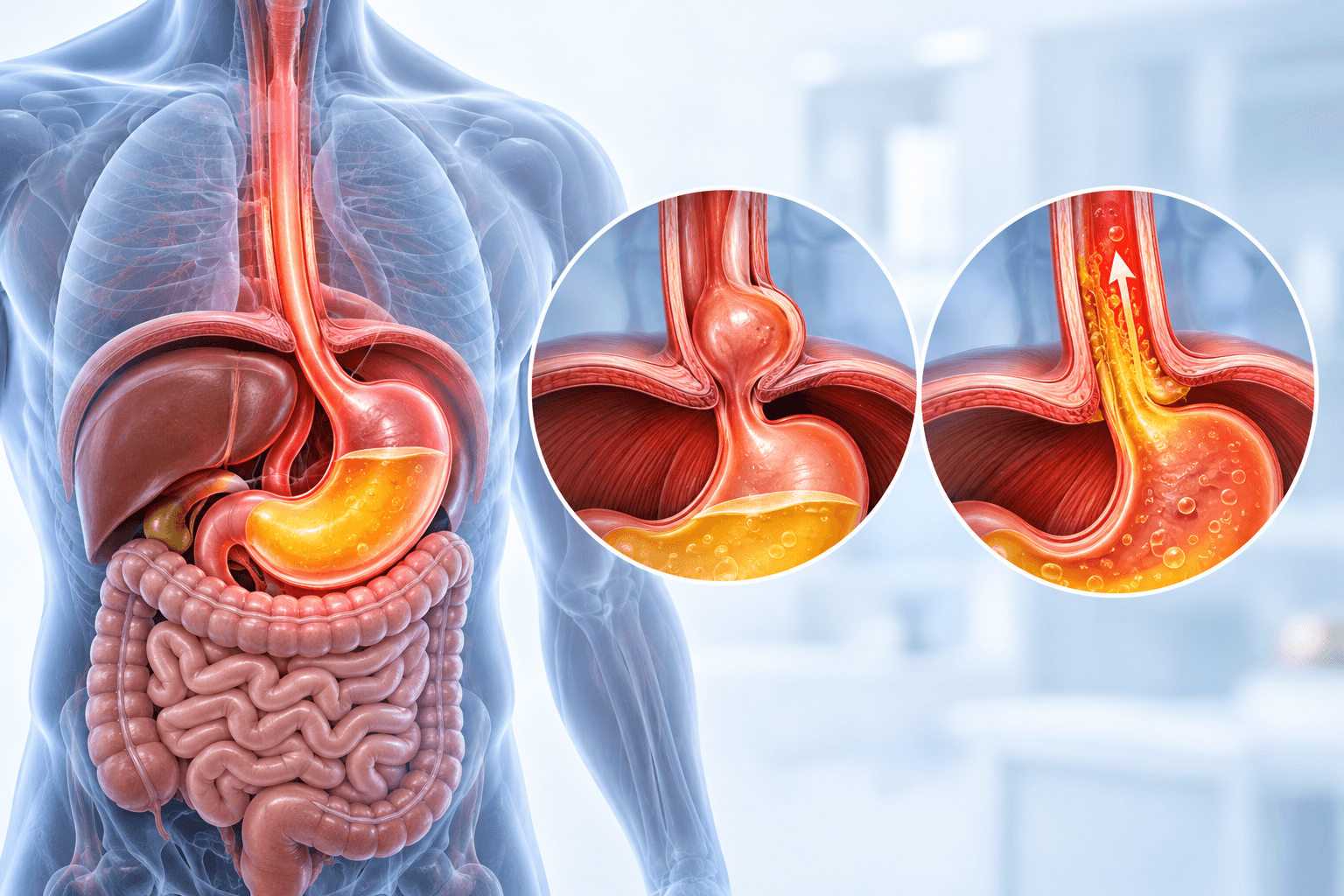
Your diaphragm is the muscle that separates your chest from your abdomen. The esophagus passes through an opening in it called the hiatus. A hiatal hernia happens when part of the stomach pushes up through that opening into the chest.
- Sliding hiatal hernia: the most common type. The top of the stomach and the lower esophagus slide up into the chest.
- Paraesophageal hernia: part of the stomach squeezes up beside the esophagus. These are less common but more likely to need surgery because the stomach can become trapped or twisted.
What is GERD?
GERD (gastroesophageal reflux disease) is a condition in which stomach acid regularly flows back into the esophagus, causing heartburn, regurgitation and irritation.
How are they connected?
A hiatal hernia can weaken the barrier that keeps acid in the stomach. When the stomach moves up, the lower esophageal sphincter loses support from the diaphragm, making reflux more likely. That's why many people with GERD have a hiatal hernia, and why repairing the hernia is often part of reflux surgery. Still, you can have a small hiatal hernia with no symptoms, or GERD without a hernia.
Symptoms to watch for
- Frequent heartburn or regurgitation
- Chest pressure or fullness after eating
- Trouble swallowing
- Shortness of breath after meals, sometimes seen with large hernias
- Feeling full quickly
Treatment options
Small hiatal hernias with mild symptoms are often managed with medication and lifestyle changes, such as smaller meals and not lying down right after eating. Surgery may be recommended for large or paraesophageal hernias, or when reflux isn't controlled. During minimally invasive repair, the surgeon returns the stomach to the abdomen, tightens the hiatus and usually adds an anti-reflux procedure such as fundoplication or LINX.
Frequently asked questions
Dealing with reflux or a hiatal hernia?
Call California Surgical Specialists at (909) 757-8425 to schedule a consultation in Upland or Glendora.
This article is for educational purposes and is not a substitute for medical advice. If you have symptoms, please see your healthcare provider.