
On this page
If your surgeon has recommended hernia repair, you may be hearing the words "robotic surgery" for the first time. Robotic hernia repair is a minimally invasive option that allows surgeons to fix many types of hernias through a few small incisions. Here's what you can expect at each step.
What is robotic hernia repair?
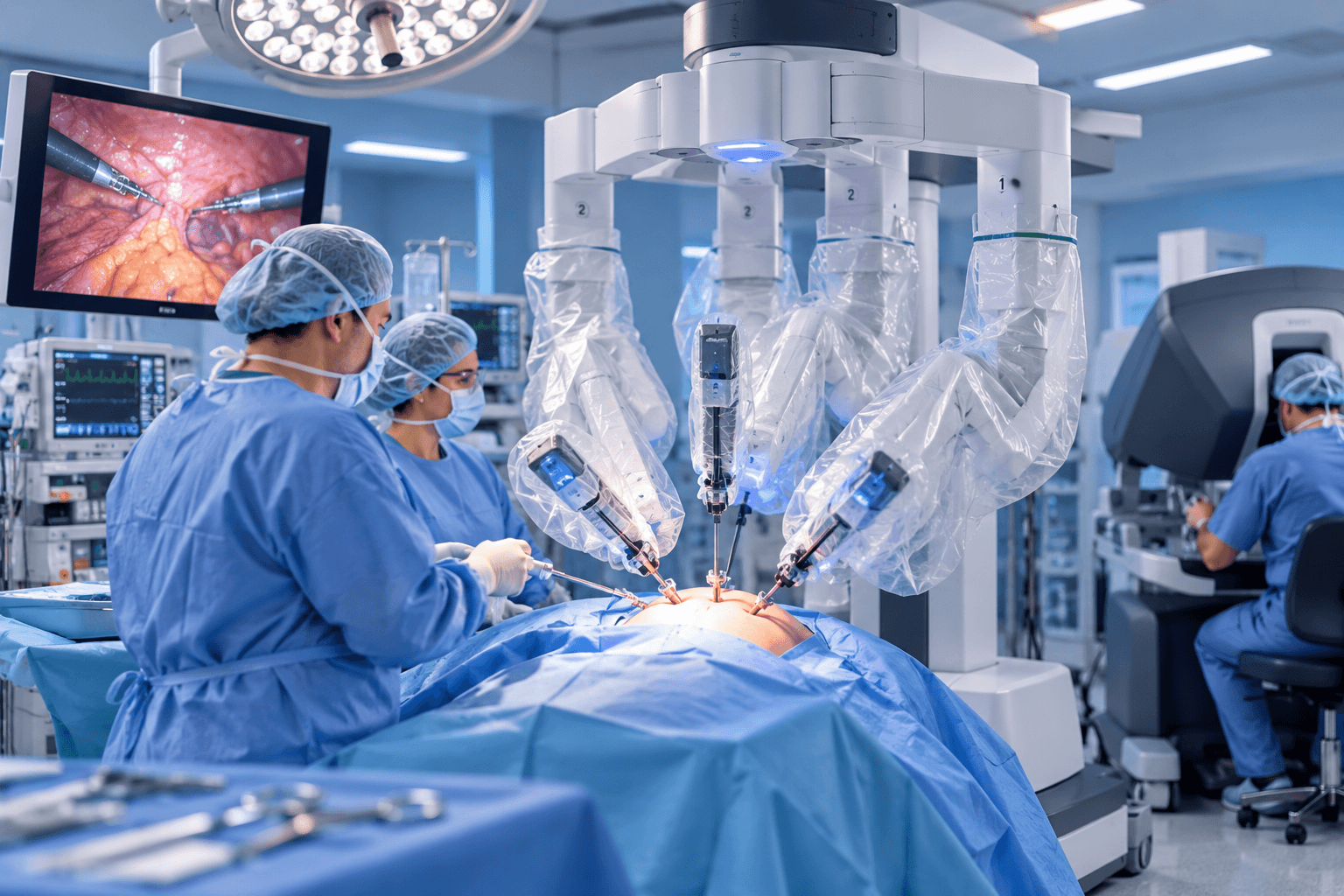
In robotic surgery, your surgeon sits at a console in the operating room and controls small instruments and a high-definition 3D camera through tiny incisions. The robot does not operate on its own. It translates your surgeon's hand movements into precise, steady movements inside the body.
Our surgeons use the da Vinci® surgical system to repair inguinal, umbilical, ventral, incisional and many complex or recurrent hernias. In most cases, a surgical mesh is placed to strengthen the abdominal wall and lower the chance of the hernia coming back.
Potential benefits
Compared with traditional open surgery, minimally invasive approaches may offer:
- Smaller incisions and less visible scarring
- Less pain after surgery for many patients
- A shorter hospital stay, often same-day discharge
- A quicker return to normal daily activities
Robotic surgery isn't the best choice for every patient or every hernia. Your surgeon will explain which approach gives you the best outcome.
Before surgery
At your consultation, your surgeon will examine the hernia, review any imaging and go over your medical history and medications. Our team will verify your insurance and obtain any required authorizations. You'll receive instructions on fasting, which medications to pause and what to bring on surgery day.
On the day of surgery
Robotic hernia repair is done under general anesthesia. Depending on the size and type of hernia, the procedure often takes one to three hours. Many patients go home the same day, while larger or complex repairs may need an overnight stay.
Recovery at home
- Expect some soreness and fatigue for the first several days
- Walk short distances often to help circulation and healing
- Avoid heavy lifting and strenuous activity for the period your surgeon recommends, often several weeks
- Keep your follow-up appointment so your surgeon can check your healing
Frequently asked questions
Related services
Want to know if robotic repair is right for you?
Call California Surgical Specialists at (909) 757-8425 to meet with one of our surgeons in Upland or Glendora.
This article is for educational purposes and is not a substitute for medical advice. If you have symptoms, please see your healthcare provider.