

On this page
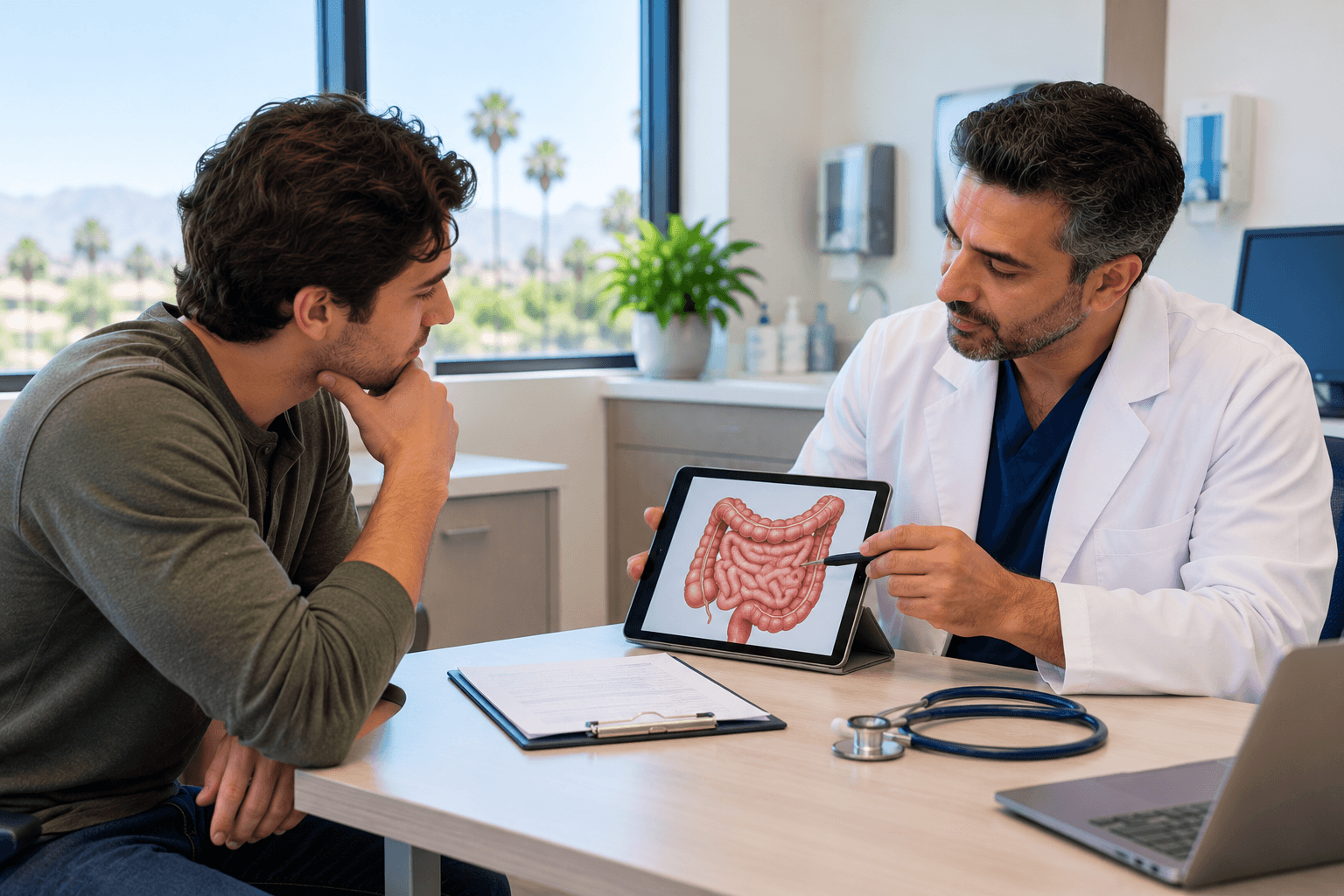
Hearing that your colonoscopy found a polyp can be worrying. Polyps are very common, especially after age 45, and most are removed during the colonoscopy itself. Finding and removing them is exactly how screening prevents colorectal cancer.
What is a colon polyp?
A polyp is a small growth on the inner lining of the colon or rectum. Most polyps cause no symptoms. Some are harmless, while certain types can slowly turn into cancer over many years if they aren't removed.
Common types of polyps
- Hyperplastic polyps: usually small and low risk
- Adenomas: the most common precancerous type; removing them lowers cancer risk
- Sessile serrated polyps: flat polyps that can also become cancer over time
After removal, the polyp is sent to a lab. Your results help your doctor decide when you need your next colonoscopy.
How most polyps are removed
Most polyps are removed during colonoscopy using small tools passed through the scope. This is called a polypectomy, and it usually causes no pain. Larger polyps may be removed with advanced endoscopic techniques by a gastroenterologist.
When might surgery be needed?
Surgery may be recommended when:
- A polyp is too large or flat to be removed safely through the scope
- The polyp is in a location that's hard to reach
- Lab results show cancer, or there's concern cancer has grown deeper into the wall
- A polyp couldn't be fully removed
- A person has many polyps from an inherited condition
In these cases, a colorectal surgeon removes the section of colon containing the polyp along with nearby lymph nodes. Many of these operations can be done using minimally invasive or robotic techniques, which may help with recovery.
Can I lower my risk of polyps?
- Start screening at 45, or earlier if you have a family history
- Don't smoke, and limit alcohol
- Stay active and maintain a healthy weight
- Eat plenty of fiber and limit red and processed meats
Frequently asked questions
Related services
Referred for a colon polyp?
Call California Surgical Specialists at (909) 757-8425 to see a colorectal surgeon in Upland or Glendora.
This article is for educational purposes and is not a substitute for medical advice. If you have symptoms, please see your healthcare provider.