
Minimally Invasive Spleen Removal
Expert surgical care for blood disorders and enlarged spleens. We utilize advanced laparoscopic techniques to ensure a safe procedure and rapid recovery.
Understanding the Spleen
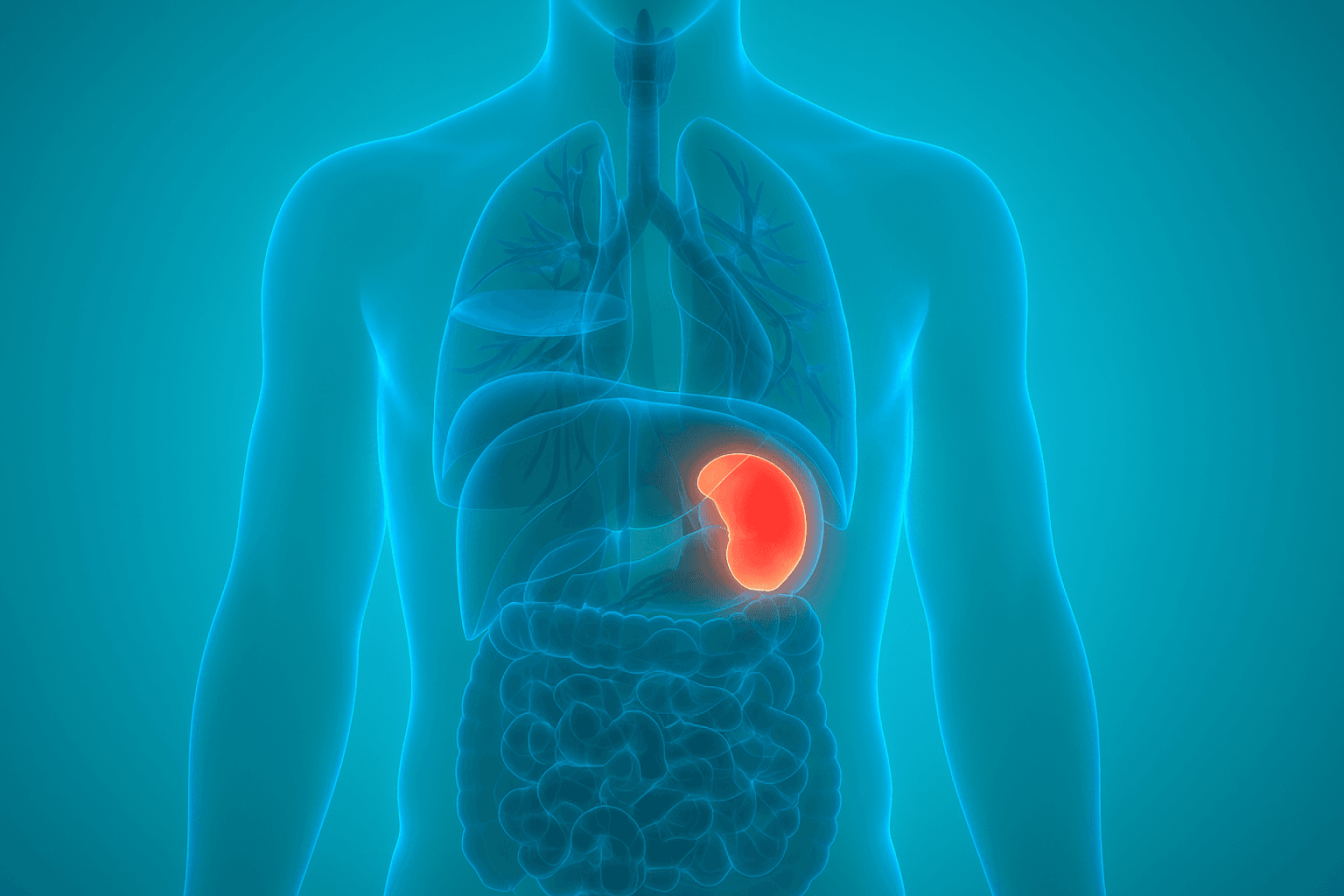
The spleen is an organ located under your ribcage on the left side. It acts as a blood filter, recycling old red blood cells and helping fight infection.
Sometimes, the spleen works "too well" and starts destroying healthy blood cells (as in ITP), or it grows dangerously large (splenomegaly), causing pain and risk of rupture. In these cases, surgical removal (Splenectomy) is the standard treatment.
Conditions We Treat
We perform splenectomies primarily for hematologic (blood) disorders and structural issues:
Idiopathic Thrombocytopenic Purpura (ITP)
A condition where the body attacks its own platelets. Removing the spleen often cures the disorder or significantly improves platelet counts.
Hemolytic Anemia
When the spleen destroys red blood cells faster than the body can make them.
Splenomegaly (Enlarged Spleen)
Caused by leukemia, lymphoma, or infection. An enlarged spleen is fragile and painful.
Splenic Cysts & Tumors
Rare growths that may require removal to rule out cancer or prevent rupture.
The Minimally Invasive Advantage
In the past, removing a spleen required a large incision under the ribs. Today, Dr. Abidali and Dr. Qureshi prefer the Laparoscopic approach.
How it works:
We make 3-4 tiny incisions and use a camera to disconnect the spleen from its blood vessels. We then place the spleen in a specialized bag and remove it through one of the small incisions.
Benefits:
- Significantly less post-operative pain.
- Lower risk of hernia or wound infection.
- Most patients go home the next day.
Massive Spleens: For very large spleens, we may use a "Hand-Assisted" technique, which still keeps the incision small but allows for safe handling of the organ.
Living Healthy After Surgery
You can live a completely normal life without a spleen. However, because the spleen helps fight specific bacteria, your immune system will be slightly less effective against certain infections.
Vaccinations
It is critical to receive specific vaccines (Pneumococcal, Meningococcal, and H. Flu) at least 2 weeks before surgery (for elective cases) or 2 weeks after surgery (for emergency cases). We will guide you through this schedule.
Antibiotics
You may need to take antibiotics before dental work or other procedures in the future.
Precision and Collaboration
Spleen surgery requires a delicate touch to avoid injuring the nearby pancreas or stomach. Our surgeons are experts in the anatomy of the upper abdomen. Furthermore, we believe in team-based care—we communicate directly with your hematologist or oncologist to ensure the timing of your surgery is perfect for your overall treatment plan.
Frequently Asked Questions
For ITP, splenectomy provides a long-term remission in about 60-70% of patients. For hereditary spherocytosis, it is essentially curative for the anemia. We work closely with your hematologist to determine if surgery is the right step for you.
A standard laparoscopic splenectomy takes about 1.5 to 2 hours.
Yes. While the spleen has many blood vessels, our surgeons are trained in advanced vascular control techniques. Dr. Abidali's transplant background provides an extra layer of expertise in managing the complex blood supply near the pancreas and stomach.