
Minimally Invasive Adrenal Tumor Removal
Expert surgical care for hormonal disorders and adrenal masses. We utilize advanced robotic techniques to safely remove tumors while preserving your recovery time.
Understanding Adrenal Disorders
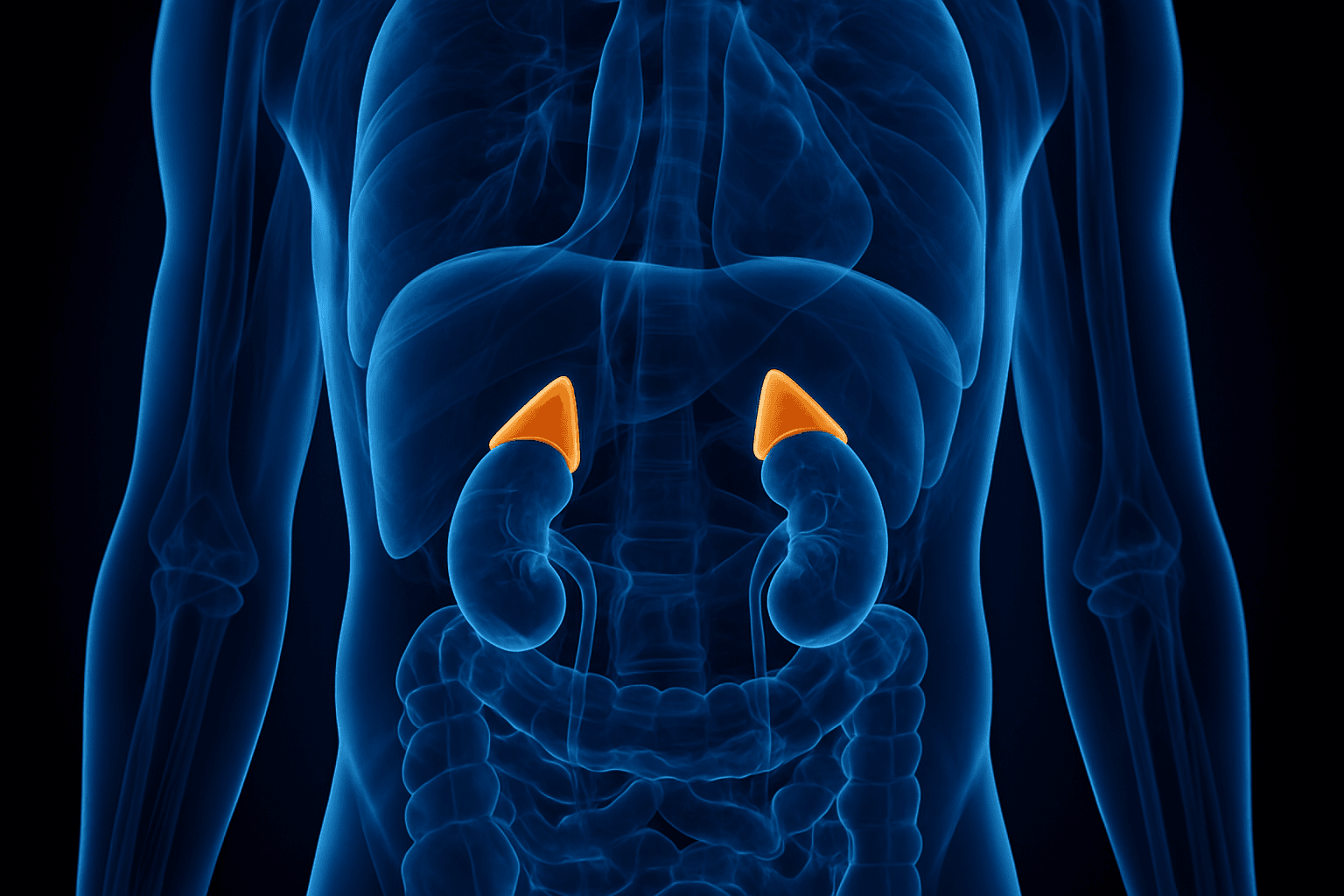
The adrenal glands sit on top of each kidney. Despite their small size, they control critical hormones that regulate blood pressure, metabolism, and stress response.
When an adrenal gland develops a tumor (nodule), it can overproduce these hormones, leading to severe health issues. Surgical removal of the affected gland (Adrenalectomy) is often the only cure.
Conditions We Treat
Conn's Syndrome (Hyperaldosteronism)
The Issue:
The gland produces too much aldosterone, causing dangerously high blood pressure and low potassium.
The Cure:
Removing the gland often cures the high blood pressure instantly.
Cushing's Syndrome
The Issue:
Overproduction of cortisol (stress hormone), leading to weight gain, diabetes, and muscle weakness.
Pheochromocytoma
The Issue:
A rare tumor that releases adrenaline, causing racing heart, sweating, and severe blood pressure spikes.
Safety Note:
This requires careful pre-surgical preparation with medication, which our team coordinates closely with your endocrinologist.
Adrenal Cancer (Adrenocortical Carcinoma)
The Issue:
Rare but aggressive malignant tumors that require complete surgical removal.
Precision Where It Matters Most
The adrenal glands are located deep in the back of the abdomen, tucked under the ribs and next to major blood vessels. In the past, reaching them required large, painful incisions.
Dr. Abidali and Dr. Qureshi utilize Robotic (da Vinci®) or Laparoscopic techniques to access the gland through 3-4 tiny incisions.
Benefits:
- Excellent visualization of the delicate veins.
- Significantly less pain than open flank surgery.
- Most patients go home the next day.
Posterior Retroperitoneoscopic Adrenalectomy (PRA): In specific cases, we can approach the gland from the back (through the muscles near the spine), which avoids entering the main abdominal cavity entirely.
Your Path to Recovery
Preparation
For hormone-producing tumors, you may need specific medications for 2–4 weeks before surgery to stabilize your blood pressure.
The Surgery
Typically takes 1.5 to 2 hours under general anesthesia.
Hospital Stay
Usually 24 hours (one night) for monitoring.
Aftercare
You will need to see your endocrinologist shortly after surgery to check your hormone levels. If only one gland is removed, the other gland typically takes over full function immediately.
Specialized Vascular Expertise
Adrenal surgery is high-stakes surgery due to the surrounding blood vessels. Dr. Abidali's transplant fellowship provided extensive training in operating on the vena cava and renal veins—the exact area where adrenal glands live. This level of vascular comfort and skill provides an added layer of safety during your procedure.
Frequently Asked Questions
Yes, absolutely. A single healthy adrenal gland is fully capable of producing all the hormones your body needs. You typically do not need long-term medication after removing just one gland.
Most adrenal tumors (adenomas) are benign (non-cancerous). They cause problems only because of the hormones they leak. We send every tumor to pathology to confirm the diagnosis.
The adrenal gland sits right next to the Vena Cava (the largest vein in the body) on the right side. The robot's extreme precision allows us to dissect the gland off this major vessel safely.